


Ep. 16 (Part 2)
Using AI to Create Financial Wellness Tools for Underserved Audiences
TAL CLARK | OCTOBER 7, 2026
Listen to Audio

Watch on Video

Episode Transcript

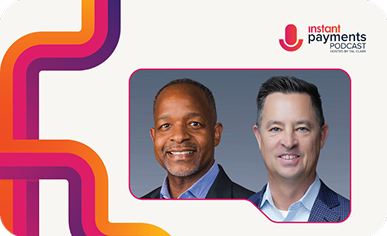
Tal Clark: Welcome back to the Instant Payments podcast. I’m your host, Tal Clark, CEO of Instant Financial, and we’re back for part two of our conversation with Amir Hemmat, the co-founder and CEO of Welcome Tech. Amir, let’s jump right back in. So we announced a partnership with Welcome Tech at the beginning of 2025, and Instant’s community of hourl- hourly workers can access Welcome Tech alongside a handful of other financial tools through the Instant app. Why don’t you just, in your words, just kinda touch on the opportunity you think for both of us, us having you participate with us in the Instant app and the opportunity we have to bring you to frontline workforces we serve. Just give me your views on what we’re doing together for the audience sake.
Amir Hemmat: Yeah, I think there’s a few aspects to it I’d love to highlight for the [00:01:00] audience. One is that just this recognition that recruitment and retention are not two separate things, but they need to live together. And so, what we love about our partnership with Instant is this recognition that recruitment, payment, retention, these are all things that, coming together we can address in a single place, for an employer, who is likely to have challenges when it comes to their HR or talent acquisition teams being able to keep up with the needs, that are happening, as well as being able to pay attention to what their workers are telling them in terms of things that are critical to their lives, that they need as well.
And so, I think so much of our partnership is coming together to be that one-stop shop, the fully tailored system for employers that are focused on frontline workers, because we cover it all together in terms of being [00:02:00] able to really be that party and partner that, that resolves this major challenge that’s only growing right now.
We see both with immigration policies leading to challenges around labor shortages as well as manufacturing coming to the US in a bigger way, creating challenges for employers. And then you and I know and recognize that some of the bigger players, the biggest players, they’re approaching things the way that we’re talking about here, right?
They’re building these tools and solutions. So the smaller companies, the guys who are building up, they don’t necessarily have a shot to compete if they’re not thinking about how to put these things into place. And I think we come together to solve, solve that recruitment and payment and retention equation, very cleanly.
Tal Clark: Well, that’s great. And I, yeah, and we’re enjoying the relationship, and I think it has such a [00:03:00] strong fit. We can dig into more of that. But look, I’m sitting here realizing in the first episode of this, and now, specifically let’s tell everybody what Welcome Tech does, right?
Amir Hemmat: Yeah. So Welcome Tech is providing benefits and job opportunities to the frontline worker in the US. And while on the surface, we are primarily seen as a custom benefits platform for frontline workers, we are building really that co-pilot for the frontline worker with our technology and our data.
The advantage we have had from the very beginning is that, as an entrepreneur, Tal, you might agree that I tend to focus on distribution, a lot of tools have been built for workers but they don’t necessarily reach the workers that are critical for the industries that we serve.
And so, we establish our ability to reach the frontline worker [00:04:00] nationally very early in our business. And as you mentioned a few times, we now have nearly five million workers on our platform that interact with us regularly. We reach another nine million through the presence we have in community locations, consulates, and embassies as well across the US.
And we make a compelling value proposition to them in terms of access to critical benefits and services for them and their household. As a result of establishing that trusted relationship and creating value for them, we then have enormous leverage not only to go bring more value to them, similar to a Costco or Amazon Prime, where we’ve got the buying power of that workforce.
But as you can imagine, employers wanna work with us because they see a platform that’s actually reaching the workforce they need to connect with and they see a platform that understands the needs of that workforce. And so, you would again see the benefits and recruiting engine that is Welcome Tech.[00:05:00]
But what I’m sharing with folks, is all of that is leading to ultimately a platform that will allow us to be that co-pilot for the frontline worker.
Tal Clark: Okay, that’s great. Dig in a little bit on the specific benefits, right? Other than the employment opportunities, but the specific benefits that they see within Welcome Tech.
Amir Hemmat: Sure. So, one thing to note is that we start with the data, right? And so understanding from the workers themselves where the needs are critical. And what you would see in the data today is that financial services tend to be the greatest need, but healthcare is the greatest demand. And so, while you and I have plenty of experience to know that financial services tend to be the foundation of it all, healthcare is what just naturally, the psychology is around, the need for the worker.
And so we’ve started by tackling primary care healthcare services, so we [00:06:00] provide, telemedicine 24/7, in any language, available to not only to the worker but to the full household unlimited plus access to diagnostics, like lab tests and X-rays and MRIs, et cetera, that are typically very costly, but very efficiently delivered through our solution.
We also have mental health services. Folks in the frontline workforce demographic are in greater need than ever in terms of access to mental health support. There’s a lot of challenges both in our economy as well as the workplace, and so we’ve made again 24/7 telemedicine available.
You can maintain the same therapist on an ongoing basis. We have a national dental network that is a top provider. It’s similar providers as what you would get as a Fortune 500 employee. Aetna PPO is what we provide as an option. And then [00:07:00] Vision with 20,000 providers nationwide. So we’ve aggregated these provider networks, and we’ve been able to get better pricing, better access, better experiences for this worker by leveraging the buying power as well as the digital distribution that we have that creates efficiency for this worker so that an entire household on average is receiving all of those services, as well as financial services they can access, educational tools they can access.
We’re working on housing and a lot of exciting stuff coming down the line as well. But for about $25 we can deliver all of that to a full household. So that means not only the worker, but for the very first time in many cases their entire household can access those services. And so, we’re really proud of what we’ve done there, and we think there’s a lot more opportunity there.
And if you think about our business model, it’s been built to allow us to be that consumer advocate, that worker advocate, [00:08:00] similar to when you look at a Costco or Amazon Prime, those are real businesses that pass a ton of value back to the consumer. In our case, back to the worker and their household.
And so it’s been about dominating on distribution that’s allowed those businesses to be able to pass value back. And it’s also been about a business model that isn’t dependent on driving margins up on those consumers, but instead, in our case, not only the subscription revenue we generate, but connecting folks to jobs generates economics for us, and we love that, cause incentives are aligned and we can depend on those economics while we focus on generating more and more value for the worker.
Tal Clark: That’s amazing. Yeah, and it’s really a great solution. We work a lot in the QSR space, quick service restaurant space, and table service restaurant space, and I think we’re engaging with the groups that we’re talking about that need these services. I [00:09:00] would love to see 100% of people participate and sign up because I think it’s great for everyone that we’re servicing. How do we make sure that we just that people are aware?
I mean, is it the employers, more so than it is the employees? I’m just looking for your experience in great services. How do we communicate it better?
Amir Hemmat: Yeah, look it all begins with trust and employers play a critical role in helping to inform the workforce. But then you and I and our teams play a critical role in helping those employers understand how this benefits them, right? Making this available to their workforce so that there’s less pressure for them on the retention and turnover front, so that their teams can focus on the critical things they need to grow their business, while their workers thrive because they are enrolled in these services.
And in a world where folks are struggling to hold on to their frontline workers… you mentioned QSR. I think both our teams cut their [00:10:00] teeth in the QSR space, and something we should be proud of ’cause that’s not an easy industry to navigate given the turnover levels that are typically there.
But, but, there’s opportunities for us to work with those employers to help them see that we can actually create more value without hitting their payroll costs, without causing more costs in their business to the worker so that they see the results of longer term loyalty to, from those workers and workers that are showing up productive a- and successful.
And so, I think it starts with that trust the employers have with their workers and of course companies like ours trying to establish ourselves with the employer. So we’re showing more and more results, year over year. And then there’s pressures and forcing functions that are just working in our favor, Tal.
Like it or not, I hate to say it, but there is a lot more pain coming when you think about the challenges [00:11:00] and competition for this workforce need, and then also the economy and sort of some of the costs that are rising in particular around healthcare when it comes for all of us, but certainly this, this workforce.
So I think naturally there’s gonna be a greater need to look for solutions, and I’m excited for Welcome and Instant to work together to be able to solve that need.
Tal Clark: Absolutely. A great response and certainly look forward to doing more to make sure we capitalize on some of the things you have built, and we’re always trying to capitalize on what we’ve built as well to help this frontline workforce. Look, we’ve spent a lot of time on this podcast over the last year or so talking about the use of AI within businesses, within the restaurant industry, whatever it may be. Let’s talk a little bit about, Amir, what you are seeing relative to the markets that you’re focused on, relative to the groups that you’re trying to serve. [00:12:00] What are you seeing there as value add and opportunities by the use or with the use of AI?
Amir Hemmat: Yeah. So I’ll start a little high level, and then I’ll get more specific. I think that we both are seeing AI commoditized very, rapidly. And so our heads are spinning on all the new tools and all the new offerings that are available, all the new capabilities.
But that should be a signal to folks that it’s gonna become more and more accessible. But distribution and data are going to be critical differentiators in this world of AI. And so, having established ourselves with nearly five million folks that are interacting with us regularly, other channels, now with you guys, employers and others, we have a real moat around being able to deliver the AI tools to the [00:13:00] workforce and to the employers that we’re partnering with.
And as far as what those tools might look like and where we can go with it, I think it– you need to recognize… in our case the mission hasn’t changed, the business hasn’t changed, but the scale and ability to personalize are the things that we see as opportunities with the technology.
It’s no longer about a one size fits all, but instead it’s one-to-one, what are your needs? How do I build something specifically for you and where you are today?
And so, so I think it’s exciting to not only build for employers more efficient tools for them to reach this worker, for them to pay this worker, for them to retain and support this worker, as they evolve in their businesses.
But also on the workforce front to really help these workers thrive with tools that are built at a level where it’s personalized to [00:14:00] their specific needs, both in the workplace as well as at home. And that’s what’s gonna bridge the gap on a lot of the challenges that historically we have seen, not only in reaching this worker, but ensuring that they’re a success in the workplace.
Tal Clark: That’s great. Have you, so you guys are actively pursuing some of the things you just mentioned in regards to Welcome Tech, and if so are there things there now or things we should be looking forward to soon?
Amir Hemmat: I mean, I think it’s the thing that’s most inspiring to our team today. I know there’s a reasonable amount of concern around AI and what it means for society. But as a tech team building, and building for a demographic that historically has been ignored and hard to serve, we’re thrilled with all the new capabilities that are happening.
And it started, in our case, in our workflows and in [00:15:00] our operations and a lot of the efficiencies that are happening there. But we are now introducing new tools and capabilities into our workforce, experience as well as into our employer experience. I mean, something as simple as being able to do much stronger matching so that time is saved for an employer who has a very limited talent acquisition team and being able to screen folks with interviews at scale.
I mean, we are doing more and more percentages of our interviews through AI-driven conversations, than we were before with our call center, for example. And on the workforce front, providing custom education and training to workers so that they’re feeling better prepared, not only in the workplace, but even before that in the interview, walking in better prepared, better understanding where [00:16:00] they’re headed.
And as a result, seeing more folks get access to job opportunities and seeing them more successful, in their jobs as well.
Tal Clark: Okay. Well, that’s exciting and I think that’s a good roadmap for Welcome Tech and really all of us that are trying to serve this community over the next three to five years, right? We all need to be proficient in looking for ways for AI to support and support us internally and externally as well.
So exciting times for sure. Amir, let’s, I tell you what, let’s end with a round of rapid-fire questions.
Amir Hemmat: Let’s do it.
Tal Clark: All right, in a few sentences, tell me what you think about the following topics. Is there a habit or routine you follow every day?
Amir Hemmat: Yeah, I like to do some grounding in the morning, with some basic breathwork and exercise. I think it just sets me up right, tees up the day great. And we as CEOs spend so much of our day [00:17:00] trying to get the best out of folks and trying to make them the best version of themselves. And so for me that routine helps me be the best version of myself. Yeah.
Tal Clark: Outstanding. If you weren’t leading Welcome Tech, what would you be doing instead?
Amir Hemmat: I’ve, as you’ve heard from my background, social impact, kinda thinking about how to attract capital to real challenges in the world is what I tend to enjoy. And healthcare and housing are two categories. Call me crazy ’cause I, I like these highly regulated spaces, and figuring out how to solve within them.
And so I’d probably be building with the AI tools that are available solutions in those spaces and who knows? That may be ahead.
Tal Clark: That sounds great. All right. When you aren’t at work, what do you do for fun?
Amir Hemmat: Well, you know I’ve got two little ones at home. So a lot of the fun is focused around my son’s little [00:18:00] league or my daughter’s interests. But, yeah, I also I’m very close to my family and all of us have started to lean into golf a little bit more.
I don’t have a lot of time to play golf, but nine holes and some quality time with either dear family or friends is more and more appreciated these days.
Tal Clark: Yeah, I’m with you. Nine holes seems to be plenty me for sure.
So, well, look, this has been great. Thanks for joining us. It’s good to catch up. I look forward to catching up with you again soon. Your hands-on experience has provided many valuable insights today. For our audience, you can find Amir on LinkedIn.
We’ll link to his page in the show notes, and you can also learn more about his business at welcome.tech. You can follow along with new episodes at instant.co/podcast or wherever you get your podcasts. Please share the episode and leave a review. Thanks for tuning in to the Instant Payments Podcast.
[00:19:00]
How Instant Tips Helps Employees
From faster tip distribution to higher employee satisfaction, Instant Tips delivers results across industries. Businesses
save time with automated payouts, reduce cash-handling risks, and give team members the convenience of digital
access to their tips. Explore our resources to see how Instant Tips can make every shift more rewarding.
PodCast
Tal Clark interviews Dr. Martin Armstrong, VP of Payroll of Shared Services.

Case Study
Ultra Steak Inc. is a long-established restaurant company headquartered…

Blog
Digital tipping apps replace cash handoffs with instant, automated payouts….


