


Ep. 14 (Part 1)
AI in the Restaurant Industry: Hype or Helpful?
TAL CLARK | JULY 15, 2026
Listen to Audio

Watch on Video

Episode Transcript

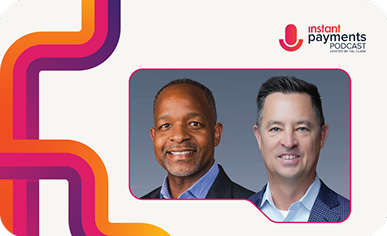
Tal Clark: Hello everyone, and welcome to the Instant Payments podcast. I’m your host, Tal Clark. I’m the CEO of Instant Financial, a fintech company that’s modernizing payments and payroll for hourly workers and their employers. I’ve worked in the payments industry for thirty years, and I’m glad you’re tuning in today.
If you like what you hear, please do us a favor and subscribe, leave a review, or suggest a future guest. This podcast features payments and payroll leaders to discuss some of their challenges and what technologies they’ve used to improve their workplace and lives of their workforce. Today’s guest has spent his career helping some of the world’s largest restaurant brands navigate transformation.
Marcus Wasdin is founder and principal of the Wasdin Company. He currently advises restaurant operators and private equity firms on digital strategy and AI adoption. Most recently, he served as Chief Revenue Officer of Par Technology, where he launched [00:01:00] Coach AI, one of the restaurant industry’s first customer-facing AI products, which expanded to more than one thousand restaurant locations within months.
Before that, Marcus held leadership roles at Inspire Brands, overseeing technology and operations across more than 32,000 restaurant locations, as well as CIO positions with Church’s Chicken and the Atlanta Hawks. Marcus has spent his career helping restaurant operators use tech to solve real business problems.
Marcus, welcome to the show. How you doing?
Marcus Wasdin: Tal, I’m doing great, man. Thanks for having me. It’s a pleasure.
Tal Clark: Yeah. Glad you’re here and excited to talk to you. You and I’ve known each other for a while and spent some good times together, so it’s, it’s great to talk about that and talk about some of the things you’ve done. So look, man you have helped organizations overall just with innovation and better reach to their customers and their clients and everything else.
So I look forward to talking about that. But give me, in your words, a little bit more on your background, a little more detail. I know you spent some time with the Hawks [00:02:00] start there and bring us up to date a little bit.
Marcus Wasdin: Yeah, of course. And again, thanks for having me, Tal. It’s a pleasure and I appreciate your friendship over the years as well. Hey, I, I kinda stumbled into the restaurant and hospitality space, earlier in my career. One of my mentors, ended up going to, to Church’s Chicken as part of a private equity group that had acquired them back in the day, and he called me up and said, “Hey, we need some help over here. Can you come help us out?”
And I’m like, I don’t know anything about restaurants other than I like to eat at them, right? And so I had no idea how complex those businesses were. And I jumped into it, and as I dug in more and more, it seems like a pretty simple business on the outside, but once you get inside, it is incredibly complex to, to deliver a product and turn a profit.
I mean, it’s just really tough, right? The margins are razor-thin, and the margin for error is razor-thin. And, so the people that, that figure it out and have great success, more power to them, man. It’s an amazing accomplishment. [00:03:00] But that’s where I got bit by the bug.
And, and so kind of left there and stayed in hospitality, but went to the Atlanta Hawks and as a CIO, was actually the first CIO of the Atlanta Hawks. Back then, the Atlanta Hawks were only the third team in the NBA to have a CIO, and they needed that role because they were undergoing a $200 million renovation of the arena, and they had to rip and replace all that technology.
So the first 18 months was an incredible journey doing that while we were playing a basketball season in a broken arena, that was a challenge. But when we got it all, Humpty put back together again, we ended up with the number one guest experience in the NBA and the number one in-arena technology in the NBA for the next several seasons based on guest feedback.
And, it was pretty amazing. It was a lot of fun. That’s kind of one lens, right? Like from the operator side. Like, I’ve had that kind of, inside the business trying to drive things, get outcomes, have great guest experiences, and all that kind of fun stuff.
And then I kind of flipped to a different lens, for the next chapter in the career, which was going [00:04:00] to work for one of the larger restaurant technology companies and owning a business line there, including the P&L and driving a business there, more specifically back office, right? So it’s the first stuff I learned when I got to Church’s around labor and scheduling and food cost and forecasting sales and all that kind of fun stuff.
And, and that’s why, the stuff that you guys do is near and dear to my heart because I’ve kind of spent a lot of time in that part of the business. Did that for a number of years and really enjoyed that. So that was kind of lens number two. And then what I would say is, lens number three, is doing some of the advisory work that I’m doing now, being the guy that’s kind of, a little bit of an outsider’s perspective, to the people that are part of a particular transaction right now and trying to give them some insights on what I see is working well and what’s not working well.
So that’s the third lens or the third chapter of the career. So, love it and, it’s, it’s in my blood. It’s in my family too. For people that don’t know, my wife is in the industry too. I would say that she’s probably one of the, world’s foremost experts on [00:05:00] payroll, HRIS, back office systems in restaurants, and was a very early adopter in earned wage access herself, right?
Tal Clark: She was, yeah. One shout out to Christie, right?
She, she has been, and Christie and I have known each other… I think I met Christie before I met you.
Marcus Wasdin: You did way before me, yeah.
Tal Clark: Yeah, And so we’ll have to get her on here in the next couple of months as well, ’cause I know she’s got some new things going on also.
Marcus Wasdin: So it’s literally in the family.
Tal Clark: Yeah, there’s no doubt about it, no doubt about it. Well, look, I mean, and that’s kind of where you and I have intersected around the, technology. I, I’ve always been in the businesses focusing technology on people with earned wage access. As you mentioned, Christie was an early adopter of that.
She was an early adopter of payroll cards back in 2003 or ’04 or ’05, somewhere in there, right? So she’s always been at the forefront, and I know you’ve been right there as well in, in some different areas of technology. So what are you seeing right now just in the restaurant leadership?
You go to restaurant leadership conference, you go to these other conferences, and it’s all been about [00:06:00] technology. And I think there is a struggle, I believe, in, in how do we adopt the newest technology while also protecting what little margins we have, and you’re familiar with that.
So what are you hearing right now in the restaurant space in regards to technology? What are people calling you and asking you about?
Marcus Wasdin: Yeah, no, that’s a great question. So what I would say is we’re inevitably gonna mention this word, and it’s an overused word or acronym, but AI, right? It’s a lot of the stuff that you’re seeing out there. And, I’ll, I wanna start the conversation with I’m a massive believer in AI and think it’s gonna do wonderful things, but the rest of the conversation’s gonna be about, ooh, we’re not quite there yet if that makes sense.
So back to your question, what I would say is, I think AI, one of the things that I’m seeing at these conferences and hearing about is that AI is enabling lots of people to jump very quickly and rapidly into the restaurant tech business. So, no longer do you have to go and find dev, If you have an idea, no longer do you have to go [00:07:00] find the massive developers and find data centers and all that kind of fun stuff.
You can spin your idea into an actual product, right? Now, typically, you have to get some folks to really harden it and do the architecture correctly and all that kind of fun stuff. Like, I’m not saying that you can just generate stuff with AI. There’s a whole lot of work behind it. But it has, I think, lowered the barrier and made teams way more efficient in order to deploy products pretty quickly. And the reason I bring that up is that now what I’m seeing is there’s a ton of fragmented solutions out in the marketplace. There’s a little bitty product that fixes this little bitty problem I have in the restaurant. Now, the problem I have in the restaurant’s a real problem and I need it fixed, right?
But I don’t need to deal with 22 different systems as a restaurant general manager to fix 22 separate and distinct challenges. So I think that’s one of the things that’s happening out there is, like, all these new solutions are coming up and they’re wonderful, but I think that’s something that restaurant operators and leaders are dealing with right now.
It’s just this fragmentation of all the solutions, right? So that’s thing number one. [00:08:00] The second thing I was seeing, so I got at NRA when I was kind of cruising around there, and specifically, in the, tech area, it’s … AI is all over the place, dude.
Tal Clark: Some of it, it gets kind of annoying. I went to a, been to a pitch session actually in Atlanta where companies had just finished their Series A and they were making presentations for some of these things, and there was six of them presenting, I think.
Five of the six, it was all AI, and the one that wasn’t was actually a breath of fresh air. I’m like, “Okay, I’m interested in this dude.” Right?
Marcus Wasdin: Yeah. I mean, and so, yeah, what I’m seeing, right, is there, even, like older established companies are slapping AI on the tail end of their name, like it was all in the branding and the boots and all of that kind of fun stuff. And, I really believe that providers in the restaurant tech space, and probably providers everywhere, but I’m super familiar with the restaurant tech space, are in this tug of war where on one side, most of the operators I talk to are [00:09:00] kind of sick about hearing about AI for AI’s sake, right?
Like, don’t talk to me about AI. Talk to me about the solutions that you provide. Talk to me about how you make things bigger, better, faster, cheaper. What value are you delivering? And if you happen to do that with AI and it makes it cheaper, bigger, better, faster, that’s awesome. But lead with what are you fixing, right?
Now, on the other side of that tug of war for these particular providers are the investors that you mentioned, Series A and other things. That’s all most investors want to hear about is AI, ’cause that’s where they want to put their money. And so the providers are in a tough spot, in my opinion, right now because they’re trying to speak one language to their customers, which is, “Here’s the value we deliver,” while also weaving in the AI message to keep the investors happy.
So I think it’s a tough spot right now.
Tal Clark: Yeah. Yeah, there is certainly some AI fatigue and it’s everywhere. But I guess because it is just so prevalent right now, and that’s where the money’s going. So, so what do you… where do [00:10:00] you think the operators still struggle with technology? So pulling back a little bit from AI, like what problems are you seeing that they’re trying to solve right now from an operator perspective?
Marcus Wasdin: Yeah, it’s usually, help me with food, labor, and running my restaurant better, right? I’m sure there’s fatigue around hearing that, but man, like, it’s one of the businesses that you guys are in, which is how do I make life better for the folks that work at my restaurant?
How do I retain talent? How do I attract talent? And I think that’s one of the things that, you guys were super early on, which was how do we provide this benefit that makes the employee or the team member experience better? And how do we provide something that… I’m a big believer, I heard a long time ago, if you’ve got grumpy employees, right, like that grumpiness usually rubs off on the guest, and that’s never a good thing.
You need to have some happy employees. So, I, think they’re still trying to solve the same problems that they always been trying to solve. It’s just that the screws keep get- getting turned a little tighter and a little tighter and a little [00:11:00] tighter on those particular problems.
Tal Clark: Yeah.
Marcus Wasdin: So and then the other piece is, I think restaurants are struggling a little bit, on the front, the top line part, just driving transactions and getting people into the restaurants.
I think that’s a big challenge, too. The check average has been ticking up and up and up as people try to cover these costs and maintain their margins and things like that. But you can only drive check average up, so much before people stop coming. And so trying to find that delicate line of how do I get the traffic numbers up because people are really discerning in this kind of environment.
There, there’s a lot of health conscious stuff going on out there. There’s a lot of talk about, a lot of folks on GLP-1s and how’s that impacting QSRs and all that kind of fun stuff. So I think, I think driving traffic and making, making moments memorable and having that great guest experience and making people want to come back over and over again is the top line problem.
And then the back of the house problems are still kind of the same. They just keep getting harder and harder to [00:12:00] deal with, which is food and labor costs.
Tal Clark: Yeah. Well, that’s huge. A couple of things there I wanna follow up on, and this is a tough question that I often ask myself, but I’m gonna ask you ’cause you probably, we can help explain it, is that, and in our business, so we are providing solutions, instant pay and instant tips that help resolve the labor problem.
We know that 83% of the people working in this space are paycheck to paycheck, and they need access to their money. And so many times, Marcus, we know that we have a restaurant that is interested, they think it’s critical, it’s important, but it falls behind the POS change they’re about to make, or it falls behind the HCM change that they wanna make, and you’ve been on that side of it.
So, it just, maybe how does Instant break through? They’re going from one, one HCM solution to the next. And inevitably, it ends up tougher and longer than they expected, and I’m [00:13:00] not sure they’re gaining any value by making those changes, whereas they could push value to their employees by doing some of the things we offer, which they ultimately do, but it just takes a while to get there.
Why does that happen? Why do we see the turnover in the point of sale technologies, turnover in HCM technologies in these restaurants?
Marcus Wasdin: Well, I got, I, gotta tell you, I think the POS guys and the HCM folks and the back office folks and the loyalty folks, like all those people, I think it’s a very easy thing to point to and try to build a business case around. Now, I’m not saying that those business cases always materialize, right?
Like, but it’s pretty easy to kinda say, “Hey, look, the POS is the heartbeat of your restaurant. If you have a, 20 or 30-year-old point-of-sale that’s fragile to integrate with,” and that kind of fun stuff, there’s probably a pretty good business case for you to go and replace the point of sale because it’s really the nerve center.
Every single transaction goes across that point of sale. That’s a… That’s, open heart surgery, man, on a restaurant. Like, when you’re changing the POS, it is [00:14:00] disrupting everything, and so you’ve gotta take those decisions, very seriously. So I think when you have, as you and I know, turnover is not only pretty high in the restaurants, but it’s relatively high in the leadership of restaurants.
And so when somebody new comes in, they evaluate what’s going on, and then they get hooked on, “Hey, there’s a business case that if we change this HCM or back office or POS or whatever, it should be able to drive some incremental return for us.” Now, I-I’ll give you a case where in, my previous life, and I won’t mention the particular company I was at the time, we were way down the road on a POS evaluation and because mainly the franchisees had gotten very frustrated with the existing provider, which that’s not a new story, right?
Tal Clark: Yeah.
Marcus Wasdin: Everybody loves to hate on POS providers, whether it’s their fault or not. But we got down to the point where we were almost ready to sign the dotted line, and we reevaluated how much this was going to cost and how much time and disruption it was gonna cause, and we stepped back and said, [00:15:00] “What are we getting for this?”
So I-I-I… Am I, gonna be able to recoup this return in a year, two years, five years? And the answer was no. Like, I’m not gonna be able… Like the solution we have is modern enough, it’s good enough, let’s focus on other things. So back to your original question, which is, unfortunately, I think those bigger systems are easier to point at and say, “Hey, there should be some sort of return.”
I think for Instant, like one of the things that… Y-you’ve gotta find the leaders that understand that attracting the best talent and retaining the best talent is what we’re here to do, and earned wage access is one of those things that has become table stakes for you to do that.
Tal Clark: Yeah. Yeah.
Marcus Wasdin: I think for you guys, as you look at, talking to execs about what’s going on and what they’re trying to accomplish, you gotta break, somehow break through to the people leaders or the the people in those organizations that care about the folks and the team members and attracting them and kinda get their attention.
But, I, I don’t have a silver bullet for you, buddy.
I just think [00:16:00] those other systems are easy to point at. You know what I mean?
Tal Clark: Yeah. No doubt. No doubt. And, yeah, so it’s about our people, and that’s one of the things we just completed the Underserved Report that we did with our mutual friend, Jason Dorsey, in the Center Generational Kinetics, and Jason did a great job on that for us.
And it’s, it shows us the data points that there’s just, there is pain amongst the employees in the restaurant space, quick service or table service, either one, right? And there, there are options for accessing money and there are… and sometimes just not even having access to money without paying a fortune to get it is just challenging, and those are the things we’re trying to solve.
And sometimes I’m like shaking my head about… let’s get it, we gotta get it done. And we’re having a great run and it’s a great time, but you always wanna do more. So, let’s go back to AI just a little bit. It seems to be everywhere. What’s, from your perspective, what’s real and simply hype, [00:17:00] around AI, especially for the restaurant industry?
Marcus Wasdin: Gosh, I think it’s mostly hype right now. So it, it’s funny, I got a couple examples for you. I think what’s re- Like, in, the, in some of the advisory work that I’m doing now, there’s a lot of technology and services firms coming out of the woodwork trying to get, kind of my attention and some of the other principals in this deal’s attention.
And I had one guy call and say, “Hey, we’re the foremost leading firm for restaurant tech. we’ve done more AI than any other firm, we would assert,” blah, blah, blah. And so we ended up taking their call, right? And this was earlier this week. And when we got on the phone and they went through that spiel and talked about all their AI credentials and chops, I said, “Hey, give me an example where you have deployed something that is AI powered that has delivered an outcome for a business,” right?
What has it done? What value has it delivered? His first response was, “Well, our internal developers use [00:18:00] AI to make themselves more efficient with development.” I’m like, “Okay, I gotcha. You’re using Claude Code or you’re using Cursor or you’re using whatever. I get it, and there’s value in that.
Like, I don’t want to discount that, right? If you becoming more efficient can turn things faster and cheaper, that’s great, and that’s gonna make an impact to me as a client. But that’s you internally, right? What have you deployed that’s AI enabled that is making a difference, right?” And, like, it was crickets, dude.
Like, there was nothing, okay? And so I give you that example to say a lot of it’s hype. Now, there’s a lot of potential, right? So one of the things that I, happen to sit on the advisory board of a quick serve, voice AI company, that is trying to figure out how do they take these high repetitive tasks that are usually pretty draining on people, right?
If you’re just sitting there, like, I don’t know how many people out there have watched people in a drive-through with a headset on, dude. Like, that is a tough job, man. Like, it is really, tough. And so if you can take that type of [00:19:00] burden off of someone so that they can actually focus with the guest and interacting and making sure things are happening, I think that’s a big thing.
And so the challenge, that’s such a good use case in that space. The biggest challenge in that space, though, is that the cost of goods of delivering that service are higher than the, than the restaurants are willing to pay and allow that provider to get some sort of margin to be in business, right?
Tal Clark: Wow. Wow.
Marcus Wasdin: You’re talking it’s really expensive to deliver, voice AI at the drive-through. Somewhere between 1,000 and 1,500 bucks just for the cost of goods, Tal. And economics from a tech perspective. Like, when I was at Inspire and Arby’s, their entire tech stack cost 1,000 bucks,
Tal Clark: Wow.
Marcus Wasdin: And so, until, once they figure out how to compress those cost of goods and can charge something that’s meaningful, then I think it’ll take off, right? Like, I think the potential’s there. So I think that’s one. I think the other one, again, back when I was at Par and we launched Coach [00:20:00] AI. it was a tool that allowed natural language questions and queries for the data that already existed.
So think about, like, my days back at Church’s Chicken. They got two deliveries a week. It would be great as a manager for me to just be able to ask something, “Do I have enough chicken to last me till the next delivery?” Right? In order to get that data, you had to look at two or three different reports, right?
And it took you maybe 10 or 15 minutes, and you’re off the floor for that time and whatever. So we deployed that, and it was great, but it didn’t get the adoption that I expected it to in the restaurant. Above restaurant, it got massive adoption. You could ask it really cool stuff. Like, if you’re an operator that had eight restaurants you’re operating, you could say, “Analyze my sales and my open and closing hours and make a recommendation as to whether or not I should change my operating hours, right, to maximize profitability.”
And it, like, would come back with a recommendation on that, which was pretty cool. In the restaurant, they just didn’t have time or savvy to ask it the right questions, right? They’re too busy trying to serve customers. So turning that from reactive to proactive, so instead of me saying, [00:21:00] “Do I have enough chicken?”
It tapping me on the shoulder saying, “You’re not gonna have enough chicken. You need to do something about it,”
right?
Tal Clark: Yeah, there you go.
Marcus Wasdin: I think those types of solutions, along with, how do I schedule and optimize that? How do I bring all the compliance stuff into play? Because that’s a big deal in labor, and all that kind of fun stuff.
I think there’s a lot of solutions that can provide a lot of value. I just think a lot of people are talking a lot about it today and not really delivering that value yet. But it’s coming.
Tal Clark: Okay. Okay.
Well, look, this is… we’re gonna pick this back up in the next episode, Marcus, but this has been a great conversation. There’s so much happening in the restaurant industry right now, and your perspective on technology matters now more than ever. We’re going to pause here and again pick this up in part two, where we’ll dive deeper into AI adoption trends and what’s next for the industry.
For our audience, you can find Marcus on LinkedIn. We’ll link to his profile in the show notes. You can follow along with new episodes at instant.co/podcast or wherever you get your podcasts. Please share the episode and leave a review. [00:22:00] Thanks for tuning in to the Instant Payments Podcast.
How Instant Tips Helps Employees
From faster tip distribution to higher employee satisfaction, Instant Tips delivers results across industries. Businesses
save time with automated payouts, reduce cash-handling risks, and give team members the convenience of digital
access to their tips. Explore our resources to see how Instant Tips can make every shift more rewarding.
PodCast
Tal Clark interviews Dr. Martin Armstrong, VP of Payroll of Shared Services.
Case Study
Ultra Steak Inc. is a long-established restaurant company headquartered…

Blog
Digital tipping apps replace cash handoffs with instant, automated payouts….


