


Ep. 11 (Part 2)
Workforce Trends Around Earned Wages, Digitization, and AI
TAL CLARK | MAY 13, 2026
Listen to Audio

Watch on Video

Episode Transcript

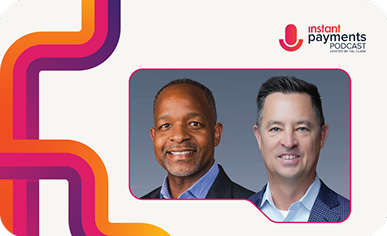
Tal Clark: Welcome to the Instant Payments Podcast. I’m your host, Tal Clark, CEO of Instant Financial, and we’re back for part two of our conversation with Ben Elliott, the CFO of Randstad USA, one of the largest talent organizations in the world.
Ben, thanks again for being a guest on the show. Let’s jump right back in and talk more about staffing trends. Let’s go back to, we were wrapping up part one, talking a little bit about earned wage access and what Instant Pay means for your organization.
Let’s touch a little bit on the talent. How has the talent responded? To what we’re doing in delivering their pay each day? I know in some locations we’ve seen major improvements in shift adherence and turnover, one site reporting a 56% reduction in call outs and turnover dropping from 20% to 6.9%. So what are you hearing from the talent and what has that [00:01:00] meant for operations and client satisfaction?
Ben Elliott: Yeah, I mean, look it you you touched on it. I mean from a retention on our big sites. The fact that the program’s there helps us recruit people, but it also is an important retention feature.
Tal Clark: Okay.
Ben Elliott: We’ve all read enough in the, the press and on the global economy about the challenges of the financial structure that’s in place.
And people have a right and it’s a psychology. It’s changed where people now believe they have a right and access to their pay on a daily basis, as opposed to waiting one week, two weeks, or, frankly, in Europe it’s a monthly payroll cycle. So, so it’s really changed quite a bit to the talent.
I think the misnomer is that this is something that is only important to hourly wages. We have seen, both on the gig side, folks [00:02:00] wanting to be paid early access to the pay, but also on the professional side. So it’s not just limited to your lower wage, hourly workers.
it really appeals to the entire workforce.
Tal Clark: Yeah. Well, that’s good. And we’ve shared some of the research with you. We see the positive impacts that it’s had at Randstad. We know that immediate wage payments to employees still has room to grow in the US and in the US B2B market, the US staffing market. What would you say… you, you touched on it just a little bit, what would you say to other business leaders? Not only in the Atlanta Metro where I know that you engage with them, but in the staffing industry as well. How should we message it? What would you say to other business leaders about adopting earned wage access and make sure their employees do have that access?
Ben Elliott: The fear that we had in the beginning was that [00:03:00] if you offered a program like this, that people would come to the end of the week and have trouble managing their money. And I think this is, takes the employer out of that equation of my responsibility to manage their finances and really empowers the worker, if you will, the talent to manage their finances.
And what we have not seen any of the those types of issues from our group. And, again, I think the appeal is the access to their funds, access to their funds on a daily basis. And that’s really enriched their lives. But it, the proof for me is in the retention, the employee retention that comes from participation in these programs.
And, from an overall standpoint, I think that’s what we’re trying to do is make that employment experience a very positive one. And that early access to those [00:04:00] wages lets you do that.
Tal Clark: Yeah. Well that’s great. I know that’s critical to you guys because you have a team of people out there recruiting, employees recruiting to fill the roles that you’ve, you need to fill for your client organizations. Right? So, it’s really important. I think that’s a great point. We do see people that are more likely to show up for work, they’re more likely to apply for a job where they get wages every day. I mean, look, here’s the thing, we’re hiring people today that have been trained for immediate satisfaction in almost everything. I mean, we don’t, we you can Google everything.
You can get whatever you wanna watch, anytime you wanna watch it wherever you are. You can get food brought to your door anytime you want to get food brought to your door, you can order stuff off of Amazon and it shows up next day. And so that immediate gratification, we think is driving this as well.
And, and we’re talking about wages that people have earned, right? This is not a [00:05:00] loan, this is not…
Ben Elliott: It’s not a loan. That’s right. It’s not an advance, it’s money that they’ve earned. I think that’s the critical piece there, and that’s the differentiator.
Tal Clark: Absolutely. Absolutely. Well, good. And, we’ll, we look forward to continuing digging into that with you guys and making sure we serve your employees as well as we can going forward. You’ve had a front row seat to global workforce trends. What are some of the biggest shifts you are seeing right now in how companies are managing and supporting their people and just the business environment as a whole?
You guys, you know your business obviously, but you also have insight into, other businesses and the companies you’re serving. What are you seeing there from workforce trends? Things that they’re doing from a benefits perspective and just making sure that, that both you guys are supporting your people with new technology and then also your partners.
Ben Elliott: Well, it’s a great question. I mean, first of all, Randstad, [00:06:00] publishes an annually, it’s called the Randstad Work Monitor. And the 2026 edition is available. And in there it identifies some of these key trends. Before I get into that, I think it’s important to say that Randstad’s strategic, one of our four strategic pillars right now is the digitization of our business.
I can hold up a, a smartphone here and everybody pretty much has that’s where people want to do their life, work on, and from. Whether it’s, as you said, DoorDash, or whether it’s finding a job, all of those things. So for us, that’s a real important, part of our strategy is the digitization.
So we have the Randstad app, which allows you to both enroll on the app and then [00:07:00] review jobs and opt and actually select positions for you to go to work on, which, which is, I think that’s an important trend that is out there. And Randstad certainly wants to be part of that trend.
When you talk about the economy, 95% of CEOs are saying that there’s gonna be growth here in the next 12 months. Interesting. You contrast that with internally taking the same survey and applying it to people in the workforce and their, their estimates are about half of that.
So I think that’s an interesting, CEOs feel that way, but the employees that are working in there have a different lens. I think hitting on a couple of other things in there, one of the, from an employee retention within companies, one of the key things that we’re seeing is that the manager level or that stable manager in an operation, they’re the catalyst to that employee [00:08:00] retention. If people who like their manager who have a good manager that they work for, that manager is the one who’s providing the stability and that glue that, that holds them to an employee, to a company. I think that’s it. One of the other things that you know certainly has evolved is what they’ll call the career ladder.
And where it used to be fairly linear, and you measured yourself in terms of the promotions you would make in going up. Organizations have really flattened out. They’ve taken quite a few layers out, and as the organizations have flattened out, the career picture now looks more that you look horizontally for experiences.
Those experiences build your portfolio, if you will, your career portfolio. And so as you’re recruiting, you’re looking at somebody who’s had that variety of experiences and has, gained those variety of skills as opposed to [00:09:00] fairly a linear, vertical kind of expansion on those.
So those are just a few of the things that we’ve identified that are out there. It’s interesting. One, one issue is when you’re recruiting, pay is definitely the attraction, but what we’ve also honed in on is that retention is also, not only is it the manager, but it’s also the work-life balance.
And work-life balance is a big retention factor for employees in the company. And if you, are in an organization that, that gets sideways and frankly gets outta line. You’re probably gonna have a turnover problem in this day and age.
Tal Clark: Okay. Yeah, that, that makes a lot of sense as well. Are there any specific technologies or services that your clients are asking you for today that they weren’t asking for three or five years ago?
Ben Elliott: Well, I think, if I [00:10:00] helicopter up from what clients are asking for. It is there is a technology asked for it. In some respects it’s a form of biometrics. But what people are really looking for today is that whole area of what I’ll call if I’m hiring somebody today, are they qualified from an immigration standpoint?
And then more importantly, is the person I’ve recruited the person that’s showing up at the job site to work? So what you see is both in terms of advances in the I-9 area from an immigration standpoint, but you also have identification verification technology that’s in place today for all employers.
All employers are looking at this from, I interview… Ben Elliott applied, Ben Elliott interviewed Ben Elliott did his I-9, and then Ben Elliott showed up for the job day one. What you’re seeing today is clients are asking [00:11:00] for us to validate that from a photo identification, that it’s the same person in each step.
And that’s where employers in this market have been hit. You talk about cybersecurity, cyber fraud, things like that. That’s where combating some of that’s a new area that didn’t exist three to five years ago to the level it is today.
Tal Clark: Okay. That’s interesting and it leads me to one question I wanted to make sure that I asked you because you know this is, everybody’s talking about today, is AI and we talked to people on the podcast across a number of different industries and everybody’s figuring out where to fit it in. The requirements that you just mentioned that are new around validation of the people that you’re hiring, just to say it in general terms, is that something that you’re using or could use AI tools for? And if not, are there other places that within the staffing industry that you’re starting to see the use of AI become more prevalent?[00:12:00]
Ben Elliott: I think it’s one of those, areas that, as we move into the AI world the big challenge is depending on where you use it in the business, there’s a lot of rules, regulations around the fact that you can not really use AI for the decision process in the selection of a candidate, because what they’re looking for specifically is that you don’t have bias built into the decision making process. So you gotta be very careful and Randstad goes to great length to audit that process and use third parties to really secure that for us. So in the hiring process, it’s an efficiency issue, helping further with the I-9, helping further with the identification.
So yes, you could use the technology, but that technology isn’t involved in the decision making process to hire Tal or hire Ben from there. So I think that’s an important element. The other area for us is with all the talk [00:13:00] about elimination of jobs and stuff, what we’re actually seeing is AI is actually enhancing the quality of people’s work.
What you’re really seeing is it’s giving us an opportunity to upskill what people do. And so I’ll just take our group, my team here and both onshore and offshore. We have all gone through a real base level of AI training and how to use it in our jobs. And now we’re gonna go to the next step and really have practical classes of how to make sure you’re actually incorporated into what you do. And I think that’s where frankly the rubber meets the road is in the challenges is how do you monetize that? But it’s really how do you create the value in your organization by applying it in the right areas.
And so we’re really proactively going after that to help us. And it’s thus far, it definitely has a [00:14:00] productivity value to it, but in and of itself, it’s not the job killer. It’s more of really, it changes what you do in the position, but you can’t lose the human element of it as, as I think you’ve heard from other people.
That human element in the whole equation is critical.
Tal Clark: Okay. Well that’s good to hear. And it sounds like the application of it can certainly be helpful while at the same time, I think the big question that everybody starts with is that going to eliminate roles within certain organizations or certain industries. It sounds like it, it’ll be more benefit to you guys and benefit to the people you’re hiring as well.
So, that’s good to hear. You’re on active multiple Boards. You’re active on multiple Boards and mentor other leaders. Is there advice, if someone is coming into your space specifically, or just starting out in HR, payroll or financial leadership generally that wants to make an impact, what are, what’s some advice you might give someone [00:15:00] that’s considering a role similar to yours or, one that would prepare them for a role like yours?
Ben Elliott: I think, from my experience is, I’ve got a couple thoughts there. Number one is get involved as you’re coming into your career, invest in your career. So whether it’s in staffing, whether it’s in HR, or some of the other areas you’ve discussed is take the time to join your association for your industry. Take the time to volunteer. There are numerous volunteer opportunities. I will tell you that those are the way you make connections in this, in the business, and, and then it also helps you broaden your understanding and experience. Continuing education to me is never stop investing in your education learning.
Clearly regardless of those fields, you need to develop your aptitude and your AI skills. But you [00:16:00] also used the word mentoring. I think it’s an important element of it is develop and identify a mentor, and mentoring is two ways, right? You have to find somebody who’s willing to mentor you, but you also have to be willing to be mentored.
Oftentimes people will get into the program and they said, well, Tal’s my mentor and yet I don’t want to hear a thing Tal tells me. And that’s not how the program works. So mentoring is a two-way street and I also share with them is I tell people to find more than one. And it doesn’t have to be mentor, but I always call it like a your small board of advisors and if your early career find a few people that have more experience and use them as sounding boards to provide advice and wisdom.
But you can’t replace that. That’s a critical piece I think today.
Tal Clark: Yeah. Okay. That’s great. Great advice, Ben. And, well look, [00:17:00] let’s end with a round of rapid fire questions, So in one sentence, if we can, tell me what you think about the following topics.
Ben Elliott: Okay.
Tal Clark: One leadership principle you live by.
Ben Elliott: I’m a big Stephen Covey fan, so I’m a centered, principle centered kind of leader. So you’ve gotta have character, right? You have to have, have to have integrity. You have to demonstrate respect and, and respect people’s human dignity.
Tal Clark: Stephen Covey, that’s appropriate for a CFO as well. So I remember reading some of his books years ago. So, is there a habit or routine that you follow every day?
Ben Elliott: Probably the biggest habit of routine I follow every day is I get up every morning at 5:00 AM and work out, I’m the kind of a sound body, sound mind kind of person.
Tal Clark: Perfect. All right. That sounds great. Good to hear. I’m with, I’m there with you. What is one book or podcast that you would recommend reading?
Ben Elliott: Well, [00:18:00] recently I, I’m a historian. I like to read history, American History, and one of the, influencers from, and it’s an older book. It’s called Born Fighting by James Webb. And it talks about the Scotch Irish influence in this country. And if you read it, you actually see what a big impact it had on where we are today.
Tal Clark: Wow. I’m curious about that. Does that, is that, does that start with the Revolutionary War as an example and follow it all through or what’s the format?
Ben Elliott: It actually starts in, it actually starts in Scotland and talks about the migration to Northern Ireland and then from Northern Ireland to, to the American Revolution. So it’s pretty cool.
Tal Clark: Oh wow, that is cool. Born Fighting. Okay, that’s great. If you weren’t in finance, what career would you choose?
Ben Elliott: I probably have gone into coaching at the collegiate level. I like to build teams. I like to [00:19:00] develop teams and put teams together. So I, that’s probably what I would’ve done.
Tal Clark: I was anticipating for some reason you were going to say that, and that’s, it’s great to hear.
So I’m there with you. I think that’s a admirable career for anyone that chooses to pursue that. For sure.
So, well, Ben, thank you so much for joining us today, your leadership at Randstad and commitment to rethinking how payroll and finance support both talent and clients is inspiring. For our audience, you can find Ben on LinkedIn by searching for Ben Elliott Randstad North America to our listeners.
You can follow along with new episodes at instant.co/podcast and subscribe wherever you get your podcast. And as always, share the episode, leave a review and suggest a future guest. Thanks for tuning in to season two of the Instant Payments Podcast.
How Instant Tips Helps Employees
From faster tip distribution to higher employee satisfaction, Instant Tips delivers results across industries. Businesses
save time with automated payouts, reduce cash-handling risks, and give team members the convenience of digital
access to their tips. Explore our resources to see how Instant Tips can make every shift more rewarding.
PodCast
Tal Clark interviews Dr. Martin Armstrong, VP of Payroll of Shared Services.

Case Study
Ultra Steak Inc. is a long-established restaurant company headquartered…

Blog
Digital tipping apps replace cash handoffs with instant, automated payouts….


