
Ep. 07 Part 1
Navigating Growth in the Staffing and PEO Industry with Britt Landrum
TAL CLARK | NOVEMBER 26, 2025
Listen to Audio

Watch on Video

Episode Transcript

Tal Clark: Welcome to the all new Instant Payments podcast. I’m your host, Tal Clark. I’m the CEO of Instant Financial, a fintech company that modernizes payments and payroll for hourly workers and their employers. I’ve worked in the payments industry for 30 years at companies like Fiserv and Money Network, and I’m glad you’re tuning in today.
If you like what you hear, please do us a favor and subscribe, leave a review or suggest a future guest for us to talk to. This podcast features industry leaders to discuss some of their challenges and the technologies they’ve used to improve their workplace. Today’s guest brings a deep understanding of the people’s side of the business, especially in the HR and staffing world.
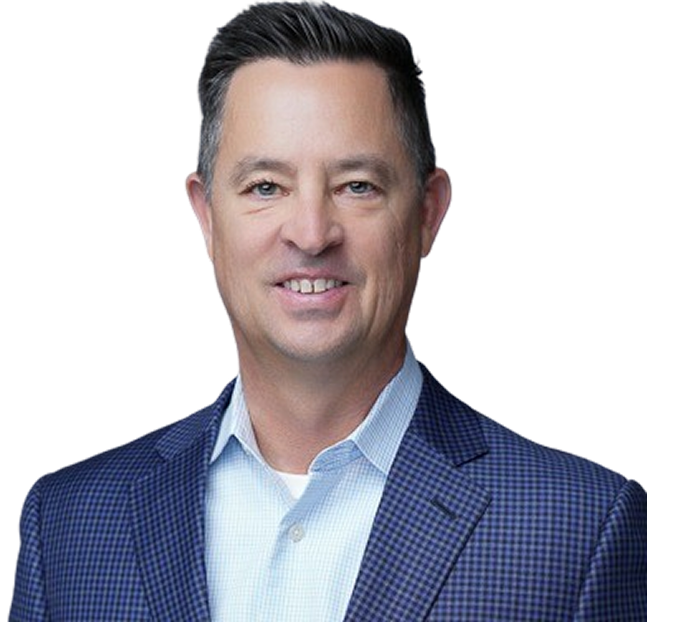
Joining me is Britt Landrum, CEO of Landrum, Inc, a company with more than 50 years of history helping employers manage their people and grow their businesses. Britt has truly grown up in the PEO staffing space, starting in the company’s mail room, and eventually stepping into the CEO role after decades of hands-on [00:01:00] experience in sales, operations, and IT. He is also an endurance athlete, Ironman competitor and musician, but more on that later.
Brittt is a recognized leader in the HR industry, serving on the board of National Association of Professional Employer Organizations. Today we’ll talk about everything from workforce expectations, financial wellness, to leadership, tech, and the future of staffing.
Britt, welcome to the show. A fellow Pensacola resident, another beautiful day in Pensacola. You’re in town. How are you doing today?
Britt Landrum: Doing great Tal. It’s great to see you. It is a beautiful day. A lot of folks don’t recognize what incredible weather we have here, but it is another beautiful day here in Pensacola
Tal Clark: Yeah, it’s great. We had a little bit of a cold snap earlier in the week.
Britt Landrum: We thought it was winter, but not, quite yet.
Tal Clark: I know it was great. I actually was on getting on a flight that day, so I missed it and it was, I don’t mind missing it at all. It was great to come back to the nice seventies we’re gonna have for the next 10 days here.
I hope everyone’s envious. We need more people down here. This place is growing like crazy, but it never helps [00:02:00] to add a few more.
Britt Landrum: True.
Tal Clark: Hey, so I gave a little bit of an introduction on you. Talk a little bit, just give me more details because you and I have known each other and visited quite a bit and get a chance to hang out every once in a while.
But I really, we never talked about like the start of Landrum. So talk a little bit about the history of the business and then we can get into to your story after that.
Britt Landrum: Absolutely. My father started the company same year I was born 1970, so you can do the math and, no secret how old I am. But, yeah, it was growing up, it was an interesting childhood. When you grow up in a family business, the business is always part of your family, the family’s always part of your business.
My father, he was heavily involved in the community. He worked for the state, but he was heavily involved in the local JCs organization and made a lot of great contacts. Prior to that at [00:03:00] FSU, he was heavily involved in his fraternity, Sigma Chi, which incidentally my middle son ended up being president of at UGA, of Sigma Chi.
So they had that connection. As well as you, I believe.
Tal Clark: Yeah, I actually was an SAE, but that’s okay.
Britt Landrum: Okay. Okay. Alright. Anyways, so he was always big into networking and, building relationships was always core to him. And so when he was working for the state, he was trying to identify a business that, met with his personality, at the same time would meet a need in the local community.
And that time, Pensacola was very young. We had several, a few, a couple chemical plants that were in need of chemical engineers. So what he did, he started out doing was in the personnel business, recruiting chemical engineers.
Tal Clark: Okay.
Britt Landrum: And did okay at that, except for anybody in the recruiting business knows you only get paid when you find the job. And so he had an admin assistant early on that came from Nashville and she said, you know what you need to do? [00:04:00] You need to get in the staffing business. So he checked that out and sure enough, if you’re in the staffing business, you get paid on a more regular basis.
I should back up. Both my mother and I prior to that time were school teachers. So they took out their retirement to start the company, which is probably the riskiest thing my father ever did. He’s super conservative, but I have to, hats off to him for taking that risk and starting the company, getting in the human resources business.
Started the staffing company in 1973 and grew like wildfire. He really, and he did this twice. Again, another thing I gotta give him credit for is he recognized the need and started something the community did not have, which was an independently run local staffing firm at that time. And it, really took off, learned from the school of hard knocks along the way, but then did it again in the early eighties.
Started a PEO, which for our [00:05:00] viewers who, don’t know what that is, it to be called employee leasing years and years ago. It’s a derogatory term, so we, the industry changed it to professional employer organization. Which probably the best description you can have. But anyway, so that business we handle lots of insurance and offsite, outsourced HR for small midsize businesses.
So we started that in the early 80s, 83. I know that because he made our family sit around the dining room table, stuff envelopes and sent mailers out to physicians. One physician ended up being our client. It was somebody from his church. But anyways, he said you’ll always remember this.
You’ll never forget this day. And I mean, I just wanted to go out and play football or do whatever I was doing. I didn’t really wasn’t, didn’t get the time, but sure enough, I mean, I absolutely do remember. It was very impactful that moment and taught me a lot [00:06:00] actually about how hard sales is.
Later on I got into sales. But, yeah, so those two companies both grew. The PEO again grew like wildfire, and for a long time we’re the only game in town until about the late 90s. And, a good friend of mine, good friend of mine now, came in with a competitor, Staff Leasing, and really opened our eyes.
Say, Hey, you’re not the only game in town. Price compression, the maturity of the of the industry came and all that. But fast forward here, that was all like in the 90s, but fast forward to today. Back then I was in sales. Our IT consultant, for one reason or another ended up leaving, so I got into IT. My dad had seen me grow up programming computers and doing, working on hardware and things. So I ended up by, by default, becoming the, the [00:07:00] IT guy, the prototypical IT guy, and I was able to grow my skillset as the company grew, which was great for me, great for the company. This is really showing my age, but this is back like when email was a new thing, right?
And the internet came out and I was good friends with the local internet provider. And, it was just a great time. It was a great time to grow my skills with the business and later on got into leadership and. Yeah, I mean it’s just, it’s been a great ride the whole way. And of course, I, it’s… I have to say that along the way, when I took over as CEO in 2018, we had to reinvent ourselves.
COVID came, as you know, everybody right after we had to reinvent ourselves, both on the staffing front as well as the PEO. And we acquired an executive recruiting firm. We did several things. As time goes on and things are evolving faster than ever, we’re having to continuously reinvent ourselves.
It’s been a great ride the whole way.
Tal Clark: That’s [00:08:00] great. That’s great. And it’s a great history there. And just to confirm, I mean, one amazing thing is you’re still a family business today, right? So many businesses like this start with your dad in this example, or even grandfathers, another example, and come through. But at this point, generally maybe they’ve sold. You don’t see, it’s, you don’t, you seldom see businesses that carry through in the family.
But today you guys are still a family owned and operated business, right?
Britt Landrum: Yeah. And I always ask myself, why is that? I’ve got many of my friends in the industry have sold, and I the prices that they’re offered for their companies are just outrageous. And so I don’t blame them at all. Not one bit. Everybody has their own set of things that motivates them.
I just love what we do. I love the value we provide, small, mid-sized businesses. I love our team. Our team, one thing I gotta give, hats off [00:09:00] to is our team is just first class in the industry. I mean, everything from our president, CFO, all the way, all the way on down.
And we’re adding more quality people. I’m excited about that. And, so it just, it makes what I do very fun. Just we’ve got a great thing going, we’re positioned in the marketplace. We’re a midsize vendor, which, you know, really as you said there, I feel like, I’m sure there are some, but I really believe that we are the largest mid-size vendor left that hasn’t sold out.
Tal Clark: Oh wow. Okay.
Britt Landrum: And it’s a great place to be because we’re able to provide the technology, a lot of the same technology that, that larger players use, but yet we still have the personalization and the human touch, if you will, of the smaller providers. So I love the space we’re in. I feel like it’s the ideal place to be for what we provide.
Tal Clark: Yeah, and we enjoy working with your people [00:10:00] too. A great team over there. We’ve had an opportunity to meet a number of ’em and, just great people. And look, we, that we work with some larger staffing organizations as well. Talk a little bit about just what’s going on in this space and why is it that you seem to be thriving?
Britt Landrum: Yeah, again we’ve had to reinvent ourselves several times. I’m a musician, as you mentioned, so I grew up watching bands do this. I’m like why did they do that? I love that last album. I love that sound. Why don’t they just keep doing that sound? Everybody loves that, selling millions of records.
But it’s because you decay. If you don’t, if you’re not growing, you’re dying. We’re able to pivot a little faster, I believe, than a lot of the larger players can. I think it has a lot to do with it. Also too, as I mentioned before, when my father started the business… heavily dependent on relationships and trust.
We still continue that over today. I think that has a lot to do with it. We’re constantly looking for ways [00:11:00] to, as everybody is, to help our clients and employees and bring in new, new technology that can benefit them. Maybe we’re able to pivot again, pivot a little faster, than a larger machine could.
I mean, I know many of those folks in those organizations, they’re great organizations. It’s just at their scale, it’s just, I mean, it’s hard to move. It’s very hard to move. It’s very hard to move. So I’d say that probably has a lot to do with it. I mean, I started out being, I don’t know if I have said this earlier.
I started out being the janitor, the custodian for our company, like when I was in high school.
Tal Clark: There you go. Okay.
Britt Landrum: So I’ve done a lot of the jobs and so I’m able to relate to our team fairly easy, easily, for a lot of the positions that they’re in, a lot of the problems they encounter, and I we’re just I guess we’re more agile.
I don’t know. I don’t know how else to put that.
Tal Clark: Yeah, I think that’s, I [00:12:00] think that’s the case in every industry and it makes a lot of sense. I mean, you see that regardless of what the industry is, smaller midsize companies, startups, it’s what creates opportunities for startups, is that larger enterprise organizations, despite many efforts and they might set up laboratories and think tanks and whatever it is, they just can’t get there.
They can’t activate new technology or new ideas in so many cases. So I think you’re right there. You mentioned understanding the people that worked here because you started out doing editorial services. That’s one of the things that we talked about on a few of these podcasts with others and just within our space, within the earned wage access space…
especially when you’re talking about enterprise organizations, one of the things that we see as sort of a gap in leadership understanding of their people. In that, there is a little, as much as I, I don’t like necessarily use the term, there’s a little bit of an ivory tower aspect to some of these large organizations.
They truly don’t understand [00:13:00] why earned wage access is important to the people that are working there. They don’t understand the day-to-day need to get by on, on lower wages. Give me your thoughts on that. Just what do you see in regards to the people there and the people that you’re providing to other agencies and organizations as well.
Britt Landrum: First of all, earned wage access. I mean, I think that provides folks, the working folks, convenience, freedom, security, peace of mind. Those, those are all buzzwords. But, it’s a game changer for folks in certain industries that, that really has become tablestakes today.
I mean, 10 years ago, everybody it was you wait on your paycheck every week, two weeks, whatever. Hopefully not a month.
Tal Clark: Yep. Some are waiting. Some are waiting a month, by the way, which is crazy to me.
Britt Landrum: I know, but now, and people [00:14:00] don’t even you don’t even need paper. You get it on a, you get it on a card. It is so convenient.
And so that’s one of the technologies that we are, we’re heavily dependent upon is what you guys provide, and we’re grateful for that partnership. The other thing that, that’s a value to a lot of people is having a portal if you will where all of their payroll, their benefits information can be housed in one place.
They can access all that together. It’s convenient, there’s not five logins to access all of your different types of data, your retirement data, your benefits data, your payroll, it’s all, cohesive in one login. That’s very important to people. I mean, it’s a different world and I, my theory is a lot of folks in leadership today grew up, again, grew up in a different environment where, to where you put your time in and, and you’ll be due certain things at a certain point, but, but man, [00:15:00] that’s not the case anymore. You have to be flexible. You have to be agile. You have to provide for the folks out there on the front lines doing the work. And the ivory tower thing, yeah it takes all types of talents to, to get a job done. I mean, not everybody be the quarterback.
You gotta have, I played tight end in high school, so I favor receivers or whatnot, but it takes all kinds of people to get the job done. And as long as everybody recognizes that then I think it’s a win. But you absolutely, you have to be in touch with your clients and their needs.
You have to be in touch with your employees and their needs and, and make sure everybody’s taken care of. Not only, we can talk about this later, but not only, mentally is a huge part of it. And I think physical health has a lot to do with that as well.
Tal Clark: Yeah, no doubt. And I definitely wanna come back to that and spend some time talking about that as well. We’ll talk, we talked a little bit about earned wage access, some of the other technology you mentioned. [00:16:00] Are there other technologies that you guys are, have adopted over the last, let’s say year and a half, two years, that you think are critical going forward?
Britt Landrum: Yeah.
Tal Clark: That maybe you’re ahead of others in. We talked about your flexibility or are there some technologies that you’re looking at adopting over the next, you’re probably working on a 2026 plan, and kinda looking at what’s going on. Are there other technologies you guys are looking at adopting that you think keep you ahead of the curve going forward?
Britt Landrum: Yeah, we let, we have internal software developers, but mainly we focus on integration. As I mentioned before, you don’t want five logins to access all your information. But clients don’t want that, employees don’t want, nobody wants that, right? So that’s basically what our development is focused on is integrations.
You guys, the vendors, y’all do the heavy lifting, heavy plowing ahead, with progress and, AI and automation, all that stuff. [00:17:00] Having said that, yeah, we are very focused on first of all our HRIS system, both for staffing and the PEO. Heavily dependent on and provides the backbone, if you will, for all of that integration, payroll, benefits, et cetera.
But yes, we are definitely, heavily into AI, as is, applicable for us. Lots of research at this point. We keep most of that, behind the scenes to, to help our internal folks do their jobs better. What’s funny is AI tools still are, you can’t depend on them because they’re incorrect.
I mean, I’ve got a good friend of mine who was telling me a story the other day about he had a question about a flexible spending account and whether he, whether his maximum limit, his wife also works and as a physician’s assistant. [00:18:00] And whether the maximum limit was the two of them added together or just one and AI said, you can add the total book together.
That’s not right.
Tal Clark: Yeah.
Britt Landrum: It still gets stuff wrong. We’ll always have what’s called a human in the loop in the process, just because you just you can’t depend on those things to be accurate all the time. I know that a larger, I mean, some of the big box providers are really, going live with all that stuff.
But our philosophy behind it is just to always have somebody, a person involved because we’re in the human resources business. I mean.
Tal Clark: Yeah, no doubt. Look, you’re that’s interesting you brought up AI ’cause I, one and it just struck me, this is a question that sort of, maybe a little bit random, but you’re sort of in a perfect position maybe to see this or answer this. I think some of the media was reporting earlier [00:19:00] this week that AI was starting to drive down employment numbers. I think we had weak employment numbers nationally in October. And, attributing some of that, starting to attribute some of that to AI, which I think is the first time I’ve seen that attributed actually AI. What do you think, is that gonna have an impact on maybe what you guys do and your staff levels, or what do you, what do think?
Britt Landrum: I can’t speak, I can’t speak from a large, an enterprise employer’s perspective, I mean, those folks have hundreds of thousands of employees. I, there’s some companies, I’m trying not to name names, but how do you, I don’t understand how you overhire 30,000 people. You have to let them go.
I don’t understand that. But in our world, somebody asked me this question the other day and I thought, when the telephone came along, it definitely impacted the carrier delivery, the message delivery service. I mean, telegrams probably went down, but you also hired operators.
All of a sudden there’s creation of new jobs. You got [00:20:00] operators everywhere having to patch through phone calls and install phone lines. have installers. I mean, so yes, I think jobs will change, but if you’re, if you, if that, if adapt, adaptivity is core, then companies will change too.
Jobs will change, skill sets will change. Folks have to be willing to change, willing to grow, learn new skill sets. And I, so to answer your question, I’m certainly not an economist, I’ll tell you that, but I do believe that, yes, some jobs will be lost, but some many more will be gained.
We’ve gotta know how to use this new technology and how to make it applicable for our companies.
Tal Clark: That’s super. That’s super. And look, I think Britt, this has been a great discussion and a great place to wrap up for here for now and save the rest of this conversation for later. For our listeners, you can learn more about Britt’s work at landruminc.com. Please tune back in for part two of our [00:21:00] podcast where we’ll discuss the future of the staffing industry.
As always, thanks for joining us on the Instant Payments Podcast.
How Instant Tips Helps Employees
From faster tip distribution to higher employee satisfaction, Instant Tips delivers results across industries. Businesses
save time with automated payouts, reduce cash-handling risks, and give team members the convenience of digital
access to their tips. Explore our resources to see how Instant Tips can make every shift more rewarding.
PodCast
Tal Clark interviews Dr. Martin Armstrong, VP of Payroll of Shared Services.
Case Study
Ultra Steak Inc. is a long-established restaurant company headquartered…

Blog
Digital tipping apps replace cash handoffs with instant, automated payouts….


