


Ep. 08, Bonus Episode
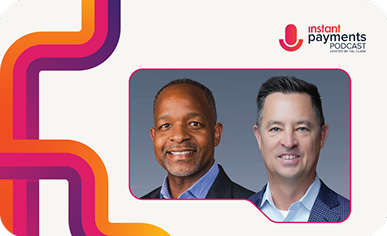
Breaking Down the CFPB's New Advisory Opinion on Earned Wage Access With Heather Heebner
TAL CLARK | JANUARY 20, 2026
Listen to Audio

Watch on Video

Episode Transcript

Tal Clark: Alright, welcome to the Instant Payments Podcast. I’m your host, Tal Clark, and I’m CEO of Instant Financial, a fintech company that modernizes payments and payroll for hourly workers and their employers. I’ve worked in the payments industry for nearly 30 years at companies like Fiserv and Money Network.
Thanks for tuning in today. If you like what you hear, please leave a review or suggest future guests for us to talk to. This podcast features industry leaders to discuss some of their challenges and the technologies they’ve used to improve their workplace. Today is a special day. We’re bringing you a bonus episode today to talk about some breaking news in the payroll industry.
Joining me is Instant Financial’s Heather Heebner, who serves as our head of compliance. Heather helps us keep everything straight when it comes to regulatory guidance. And today we’re talking, we’re going to talk about a new advisory opinion that came out from the CFPB in late December. Heather, thanks for joining me today.
Let’s dive right in.
Heather Heebner: Thanks for having me, Tal. I appreciate it.
Tal Clark: Yep. It’s good to [00:01:00] have you here. It’s good to have a chance to chat. Why don’t we start with, just give me your overall perspective on earned wage access and how it sits today in regards to the regulatory environment?
Heather Heebner: Sure. So earned wage access kind of has a couple of facets, right? So the first one is obviously a federal level or a regulatory level at a kind of overarching, legal landscape and then obviously at the state level. And we’ve seen a lot of activity on the state level where states are kind of, some states are very similar in the way the bills look.
And in other states they’ve really kind of taken a detour off of what we’ve seen. Right? So you have some states that do consider EWA a loan. You have other states that absolutely do not consider EWA a loan. But the overriding factor on the state level is that they all are looking for providers to follow what is best for the consumer and in [00:02:00] the majority of states to register with those states and provide additional data and reporting.
Tal Clark: Well, and that’s great and that’s, I know you spent a lot of time keeping up with that and we’re really ahead of the curve I think in the states and on the federal level as well. Let’s back up just for a minute. For those that might watch this that don’t know what earned wage access is, let me hear your thoughts on how you described earned wage access to regulators and others that you might come in contact with.
Heather Heebner: I was in HR for 25 years, and so to me earned wage access is a benefit that employers offer to their employees that allow them to get access to their wages after they’ve earned them, but ahead of payday. So currently most companies Tal are not equipped to be able to pay their employees on a daily basis.
Some are not even equipped to pay their employees on a weekly basis. And it’s very, it’s kind of just been the status quo that employers pay their employees on a biweekly, semi-monthly, or sometimes [00:03:00] even monthly basis. And earned wage access allows employees to get access to their wages ahead of the scheduled payroll cadence.
We really believe that’s a benefit, that’s a great distinguishing factor for employers, that they can offer that benefit to their employees.
Tal Clark: Well that’s great and that really carries us into: so what has the CFPB done? And I think let’s maybe start with a little bit of history there, Heather, ’cause you’ve been there for all of it. Before we get to the current advisory opinion, why don’t we start with just the last, what has it been three or four years in regards to, there are sort of a little bit of a on again, off again, pause, and back on again approach.
Heather Heebner: Absolutely. So as you know Tal how there was a 2020 advisory opinion that came out and that time even said that EWAs are not credit. It did not adhere to some of the TILA regs, and at that time [00:04:00] it said that it was not credit. And so we use that AO as kind of our guide there. And then under the Biden administration, the CFPB and under the previous director, if you recall, Tal, they rescinded the AO last year and they proposed an interpretive rule that would’ve made all EWA a function of credit.
And if you recall, Tal, we were very opposed to that. We actually met with the CFPB several times to state that these were not loans, that any convenience fees associated with EWA were not finance charges. And we even, we were very forthcoming with data that we felt would help our statements in that area.
And the interpretive rule got quite a bit of feedback. And just recently, on December 23rd, 2025, under the Trump administration, a revised AO came out. The interpreted, the proposed interpretive [00:05:00] rule was rescinded and the advisory opinion came out in December stating that covered EWAs are not credit.
Tal Clark: Yeah, and that’s interesting. So we all thought that the CFPB was drying up and going away. Certainly not official terms, but and then all of a sudden we get that Christmas gift. So what does it, and I want to get to what employers and how they should think about this a little bit. But before we do that give us your summary of what the AO says, those points that, that we should consider others should consider, as we move forward.
Heather Heebner: Sure. So I think what’s really important, Tal, is that the AO led with the companies should provide an option or via EWA providers can provide an option to their employees that allow them access to their [00:06:00] wages once they’re earned. And so I believe that the AO very clearly stated there is a place for EWA for consumers and the covered EWA would be that it has to be verified via payroll data that it is recouped via payroll deduction, that the earned wage access provider nor the employer engages in any sort of credit reports or credit risk rating and that it is non-recourse. And so, and those were some of the initial tenants of the 2020 AO. And so we’re really pleased that we were able to see some of that consistency throughout and really kind of discrediting the proposed interpretive rule that we saw last year.
Tal Clark: Yeah, there is some overlap there a little bit. What is the difference? I mean, are there, what are the one or two differences between the 2020 AO and the AO we just received [00:07:00] in your opinion?
Heather Heebner: I think the AO took this opportunity to say that expedited transfer fees are not finance charges. And that was another really piece Tal because we do offer a fee free option.
We’ve always offered a fee free option. That’s been very important to Instant in our philosophy of providing EWA. And just the same way that you may choose to go to an ATM that is convenient for you, you may incur additional fees. We also believe that sometimes expedited delivery fees are something that the consumer can choose and that is their choice.
But there are convenience fees associated with that so we were really pleased with that aspect as well.
Tal Clark: Good. Very similar to you can choose Venmo later or Venmo sooner, and you pay a little bit for sooner. Right?
Heather Heebner: That’s correct, yes.
Tal Clark: That’s good. And it does, and just for clarity’s sake, the AO does really [00:08:00] point to B2B providers such as Instant as the preferred way and really the way that fits the AO is a B2B2C provider, correct?
Heather Heebner: That is correct. It… what was interesting is that it really did separate how the direct to consumer from the employer integrated models and I think that was a little bit unexpected, but we are pleased with that outcome for the employer integrated piece without a doubt.
Tal Clark: Yeah. Okay. Well that’s good. If you’re, I tell you what, if we’re, we’re talking to employers all the time, Heather, and we’ve got employers who are clients of ours obviously. What should our clients and our future prospects, how should they think about this as they are considering, choosing earned wage access providers or just their participation in earned wage access?
Heather Heebner: I think it gives a really good framework, Tal, for them to [00:09:00] evaluate, earned wage access providers that they’re looking at. And I think that, how we’ve always strived to adhere to the policies that have been passed, the legislation that’s been passed and the guidance that’s been provided in this space.
And so I think employers can feel really good that if they follow these specific tenants of the AO, which again is guidance, it gives them a really good starting point with the providers that they’re evaluating. So they certainly have automatically four questions off the bat that they can go: what is your stance on these four items or five items or six items?
Right? Because there was some additional detail in the AO that we’re not covering today, but I think employers can feel confident that they have a place to start with compliance.
Tal Clark: Okay. I think that’s great. That’s a great summary because we do know that after the previous AO back in, it would’ve been 21 when really it sort of hit the streets, we do know that employers paid attention and for the most part, and I’m sure they’re paying [00:10:00] attention to this as well, and hopefully it gives them more comfort in mainstreaming EWA as a benefit for their employees as we move forward too. So, well look, what does it mean in your mind? We talked a little bit about the state regulatory environment and the legislation that has occurred at the state level, how do you see this impacting the state level?
Heather Heebner: Sure. From the state’s Tal that have already passed legislation, I don’t anticipate that they’re going to, specifically the ones that did classify EWA as a loan, I don’t anticipate that they’re going to change that. Keep in mind that those are passed laws, those are regulations in those states.
And so from a provider perspective, we will still comply with that and we will still abide by how the state classifies it. I think for a host of states that were somewhat kind of looking to see what may happen, I do believe that this will be [00:11:00] influential in as to how they may reintroduce bills in 2026.
We saw a host of activity in 2025. 45 bills issued, several did pass, but several are still in the carryover process and several obviously won’t carry forward unless they’re reintroduced. And I do anticipate that states will go back and edit anything that may not potentially may not be in alignment with AO and take into account how the CFPB has classified it.
Tal Clark: Yeah, I got it. Well, and as we talk about this, you could see how it could get very confusing and would may even cause pause for an employer who’s considering EWA. So ultimately that’s what we will do for them and hopefully continue to provide comfort in the way that we deliver these services for them because they don’t have to worry about the state or the federal ’cause we do all that worrying for them.
Right. So.
Heather Heebner: That’s correct, and I think that’s a really great call out Tal is that all [00:12:00] of these laws and even the AO, the advisory opinion from the CFPB level and even Representative Steil who introduced a federal bill back in 2024, I think it’s very important to highlight that this is regulation or adherence from the providers, not from the employer.
We have not seen a bill Tal that has been proposed or passed that has any sort of requirements for the employer. It’s all on the provider, and I think that should also give the employer additional comfort and that’s something that we handle. We don’t, that’s not something they need to worry about and we’re happy to do that.
Tal Clark: Absolutely. That’s great. You mentioned Representative Steil’s bill. I know you listened to their hearing yesterday. Going on a little bit off track here, but any thoughts after listening to that hearing?
Heather Heebner: Yeah. I was really pleased of how much support there was of the, in the House Financial Services committee. [00:13:00] I think there were a lot of good questions that were asked, but I also think that we were able to as an industry show that EWA is not alone. It is access to wages that an individual has earned and that they should have the ability to use their money as they see fit.
And so I really do feel that was the takeaway from the hearing. I felt there were, like I said, a lot of good questions asked but the outcome was what we would’ve hoped for.
Tal Clark: Well, that’s good and I’ll, I did listen to a much smaller piece of it than you did, but it seemed like it probably has some bipartisan support. Which is a little bit unusual these days, so that’s great to see as well, so, okay, cool. What does, one of the questions I know is circulating just is do we think this actually has any teeth, the AO any teeth all?
We talked a little bit about maybe the effect on the state, given that the CFPB is being weakened under the current administration. We don’t really know where that’s gonna end [00:14:00] up. It sounds like they’re looking for funding still. So with all that. What does this actually mean? What does it mean to us?
What does it mean to the industry?
Heather Heebner: For the industry, it provides clarity. As you know Tal, the AO in 2020 provided clarity and then it was rescinded and so it, it kind of put everything up into the air. What does this mean? How do people operate? And then the interpretive rule was proposed and that was much more to the other side.
And so at the very minimum, it provides clarity for the industry. It provides clarity for, for the standards of which EWA should be offered by providers. And I think that’s really key. And that also in my opinion, helps with consumer advocacy and other things too, for everyone to be pointing to the same guidance and to the same reg [00:15:00] if you will.
Now, I do think Steil’s bill is also in alignment with the AO, and I certainly think that they will be complementary to each other. And, the CFPB did submit for budgeting for at least the first half of 2026. And so at the end of the day even if the CFPB doesn’t have the same enforcement responsibility or protocols that they may have had in the past, it doesn’t take away from what is already in place and what is already happening.
So I think that clarity is key for everyone.
Tal Clark: Yep. Well, that’s great. It’s interesting to me that the CFPB, as far as I know, this is the last thing they did in 2025. And, and then we’ve got Representative Steil’s. We’re in an industry that is getting a lot of attention, that’s still an early stage industry for the most part. So it’s very interesting.
So maybe that means that everybody’s recognizing the benefit we provide. So.
Heather Heebner: When an employer looks at [00:16:00] benefits, they look at who is the best benefit provider. When employer looks at other things for their employees, they look at people who are very well versed and do the best in their industry, which Instant does.
Right? And I think what’s really key is that employers don’t wanna take on yet one more thing that they have to do when they could entrust it to a provider that absolutely prov-, offers what the AO looks for is to not be covered by credit, and that is something that should give them, should not give them pause in terms of offering it to their staff.
Tal Clark: Super. Well, look, I think that’s a great place to wrap up, Heather. Thanks as always for all the insight and helping us to keep everything straight. For all our listeners and viewers, if you have any questions about earned wage access or this advisory opinion, please leave a comment or reach out to us at marketing@instant.co.
Thanks for joining us on this bonus episode of the Instant Payments Podcast, where we discuss trending topics related to wages, payroll, and the [00:17:00] payments industry. Check out more episodes at Instant.co/podcast or wherever you get your podcasts.
How Instant Tips Helps Employees
From faster tip distribution to higher employee satisfaction, Instant Tips delivers results across industries. Businesses
save time with automated payouts, reduce cash-handling risks, and give team members the convenience of digital
access to their tips. Explore our resources to see how Instant Tips can make every shift more rewarding.
PodCast
Tal Clark interviews Dr. Martin Armstrong, VP of Payroll of Shared Services.

Case Study
Ultra Steak Inc. is a long-established restaurant company headquartered…

Blog
Digital tipping apps replace cash handoffs with instant, automated payouts….


