There’s a common misconception in the restaurant industry:
Earned wage access (EWA) and digital tips may work for small operators, but they’re too complex for large, multi-brand organizations.
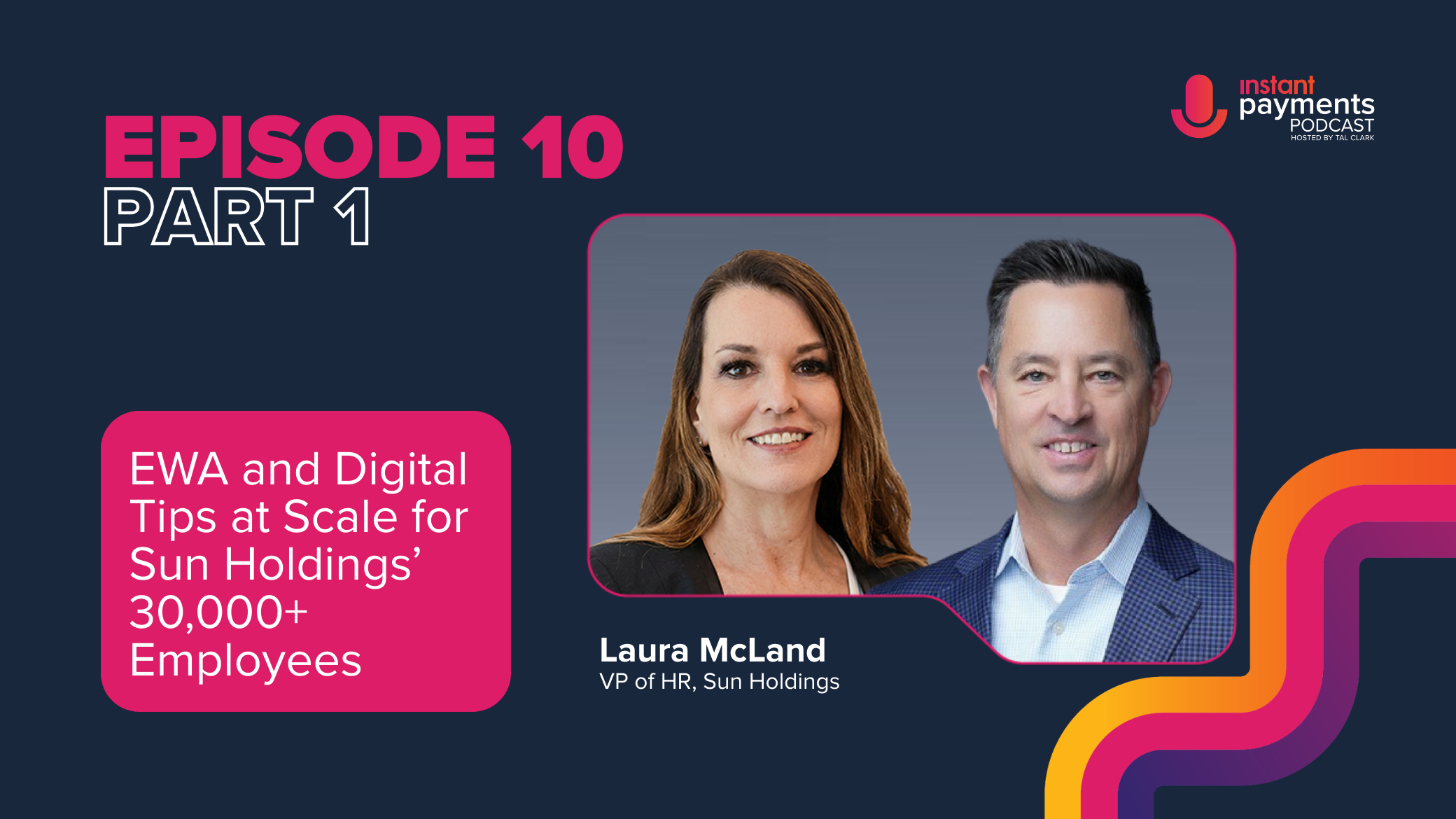
Laura McLand, VP of HR at Sun Holdings, would disagree.
Sun Holdings operates more than 1,250 locations across 32 states and employs over 30,000 people across 13 brands. In our recent conversation on the Instant Payments Podcast, Laura shared what makes EWA and digital tips not only possible, but powerful, at enterprise scale.
Scale Requires Alignment
When Laura joined Sun Holdings, the HR department was fragmented across payroll, benefits, and operations. For a company of this size, fragmentation creates friction.
“The first thing I did at Sun Holdings is what can we do to synchronize the departments?” she explained. “It was really important to make sure everything flows smoothly.”
That alignment became the foundation for modern pay implementation.
With dedicated payroll teams supporting specific brands and service models, Sun Holdings was able to deploy digital tips and earned wage access without disrupting operational consistency. Some processors support multiple similar brands to create economies of scale, while still maintaining brand-specific expertise.
In other words, scale works when systems are intentional.
Modern Pay Is Meaningful Because It Solves Real Problems
At scale, payroll is not abstract. It’s deeply personal. Laura described why partnering with us at Instant is important across a 30,000-person workforce: “Having a partner that allows us to give that customer service to our employees so that they can see the money earned right now is already in my pocket. It really makes a huge difference.”
That “huge difference” is measurable.
To date, Sun Holdings employees have accessed more than $106 million in earned wages and received over $81 million in digital tips, across roughly 1 million tip payouts. More than 14,000 employees actively use modern pay tools.
These numbers represent real-life impact, helping employees cover everyday needs like gas, groceries, and household expenses without waiting for a traditional payroll cycle.
At scale, EWA becomes an operational flexibility tool for HR, not just an employee benefit. It allows payroll teams to resolve situations immediately instead of waiting for the next cycle. That responsiveness builds trust.
Technology Must Be Both Scalable and Human
For Sun Holdings, even at 30,000 employees, every interaction must feel personal.
“When we’re talking to an individual employee, we want them to feel like they are the only one that we’re working with at that time,” Laura said. “They don’t care that we have 30,000 employees.”
That mindset drives how Sun Holdings approaches technology. Modern pay tools must scale across brands and states, but they must also feel accessible to a single employee logging in after a shift.
Laura emphasized that financial tools must be integrated and centralized:
“Instant isn’t just where I get my paycheck — this is where I can do budgeting, this is how I can file my W-2, a link to file my taxes. Having those resources available directly and immediately is extremely important.”
At scale, success comes from combining enterprise-grade infrastructure with a consumer-grade experience.
Digital tips and earned wage access work because they deliver both.
The Takeaway: Scale Isn’t a Barrier
Sun Holdings proves that EWA and digital tipping are not limited to small operators.
They can work across thousands of locations, multiple service models, and complex funding environments. But they require alignment, integration, and leadership commitment.
When done right, earned wage access and digital tips don’t create complexity. They reduce it.
🎧 Listen to the full conversation with Laura McLand on the Instant Payments Podcast at instant.co/podcast or wherever you get your podcasts.